Route Puzzle Games: Plan the Final Step Before Moving
On this page
Taking the nearest collectible can be the move that makes the exit unreachable. Route puzzle games often combine an arrival requirement with work that must happen first. Plan how you intend to finish, then decide the order that preserves that approach.
The final approach explains the useful collection order
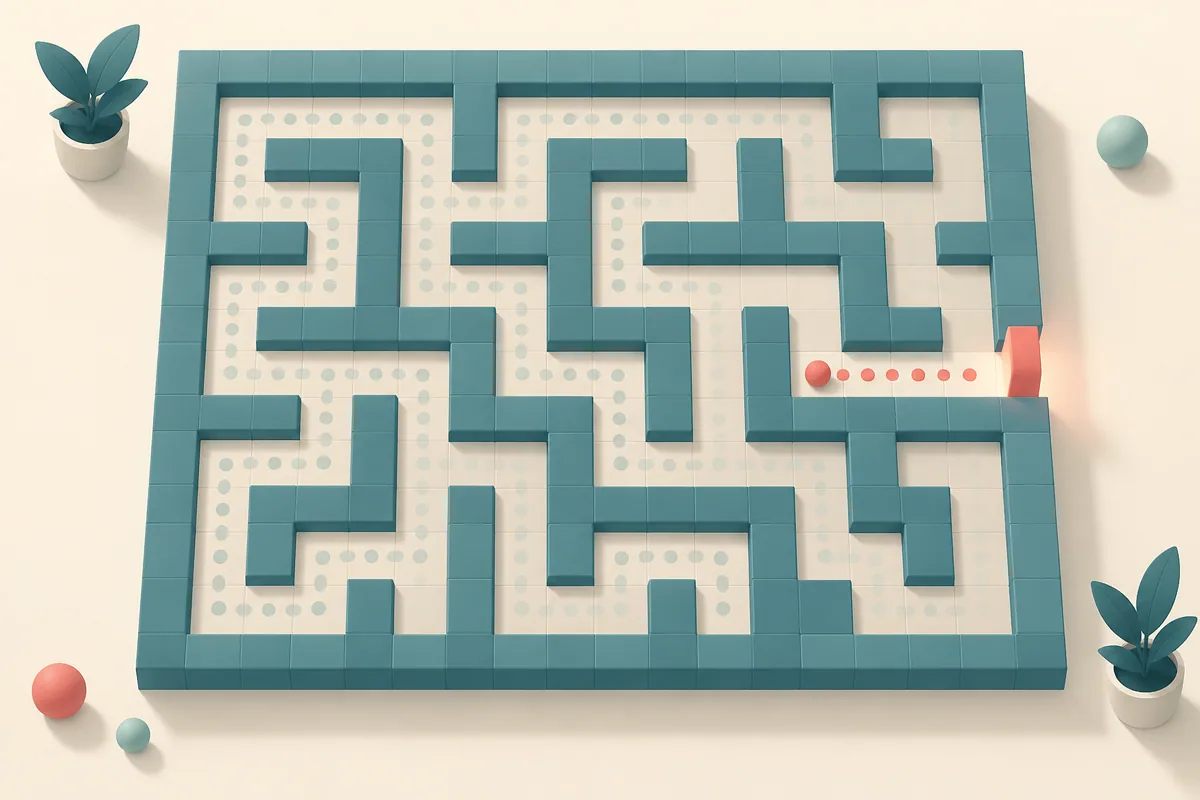
Illustration: The corridor between the last dot and the exit stays open while the rest of the route fades.
Worms keeps the exit locked until every dot is collected. Its trailing body occupies cells, and a collision restarts the level. Identify a plausible last dot and the route from it to the exit before committing to a tour of the board.
Snake Puzzle: Slither to Eat! grows the snake with apples so the teleportation gate becomes reachable. Growth is required, but the longer body occupies more room. A cramped corner can be easier to visit before collecting apples elsewhere.
ColorTrail 3D colours the track under a moving cube. The level requires every stretch painted, and traps make hold timing important. Its controls move while pressed; this is not the same freely chosen directional routing as the snake games.
Route puzzle games: inspect mandatory work before heading to the exit
For Worms, check every remaining dot and narrow corridor. For Slither to Eat, consider how length changes the space needed for later turns. For ColorTrail, inspect unpainted sections and the timing of the next obstacle before committing to a long hold.
An invented board might place an apple in a tight pocket beside the start. Leaving it until the snake is long can make the return awkward. That suggests visiting constrained regions early, but the actual gate approach still needs checking. A universal clockwise route is not established by the theme.
Separate a route mistake from a timing mistake
If the body blocks your planned corridor, the order or geometry needs revision. If a ColorTrail hold carries you into a trap, the planned section may be correct but its execution needs shorter controlled presses. Changing route strategy will not solve a press that simply lasts too long.
After a restart, name the first decision that closed the final approach. Replaying the same collection order more quickly preserves the same problem. Use the failure as evidence about which region needs a different position in the sequence.
Choose Worms for visit-all geometry, Slither to Eat for required growth and space, or ColorTrail for complete coverage with hold timing. A satisfying finish starts before the last step: it is protected by the earlier choices.
Related tags
Frequently asked questions
When does the Worms exit open?
After the final dot has been collected.
Why are apples necessary in Slither to Eat?
They grow the snake enough to reach the gate, while also increasing the space its body occupies.
Does ColorTrail use directional swipes?
Its guide describes holding the mouse button or screen to move along the track.
Why consider a cramped region early?
A shorter body may navigate it more easily, though the full route still needs checking.
What distinguishes route and timing failures?
A blocked return corridor concerns order or geometry; overshooting a trap can concern how long an input is held.
What should change after a restart?
Revise the first decision that caused the later obstruction rather than merely repeating it faster.
Try the mechanic that interests you
Play WormsMore puzzle guides
 Puzzle
Shelf Sorting Games: Free Items Without Blocking More
Compare three shelf sorters by item access, triple formation and timers. Check what a placement exposes before covering another needed product.
 Puzzle
Cube Rotation Puzzles: Track Faces as the View Changes
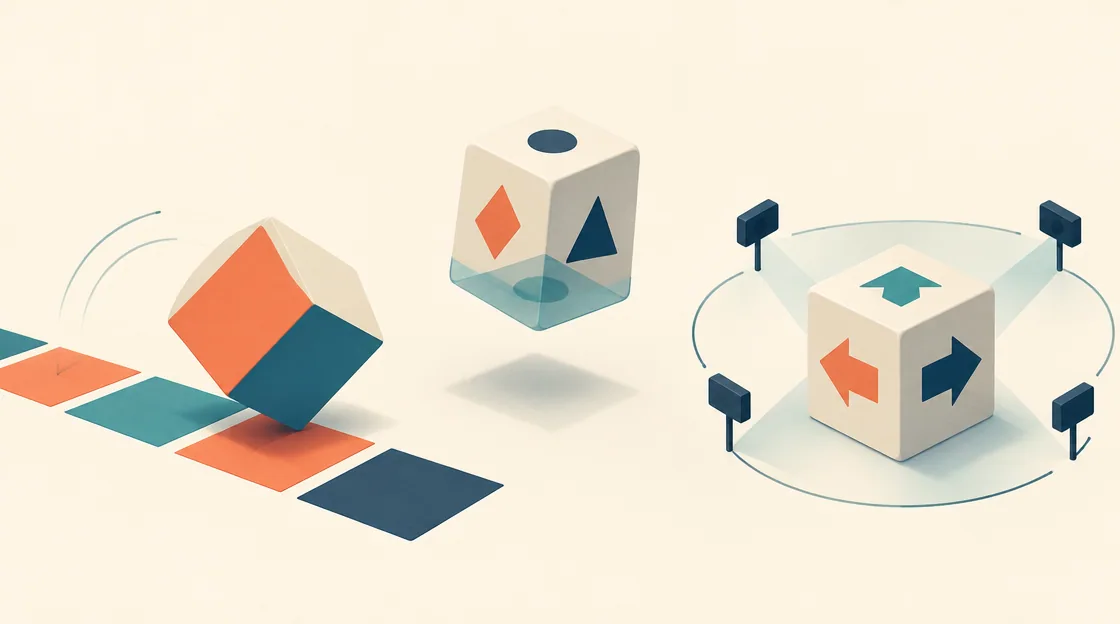
Compare a colour-faced rolling cube, a die with a hidden bottom face and arrows viewed from new angles. Distinguish object orientation from camera rotation.
 Puzzle
Jigsaw Puzzle Games: Compare Pieces, Shards and Stickers
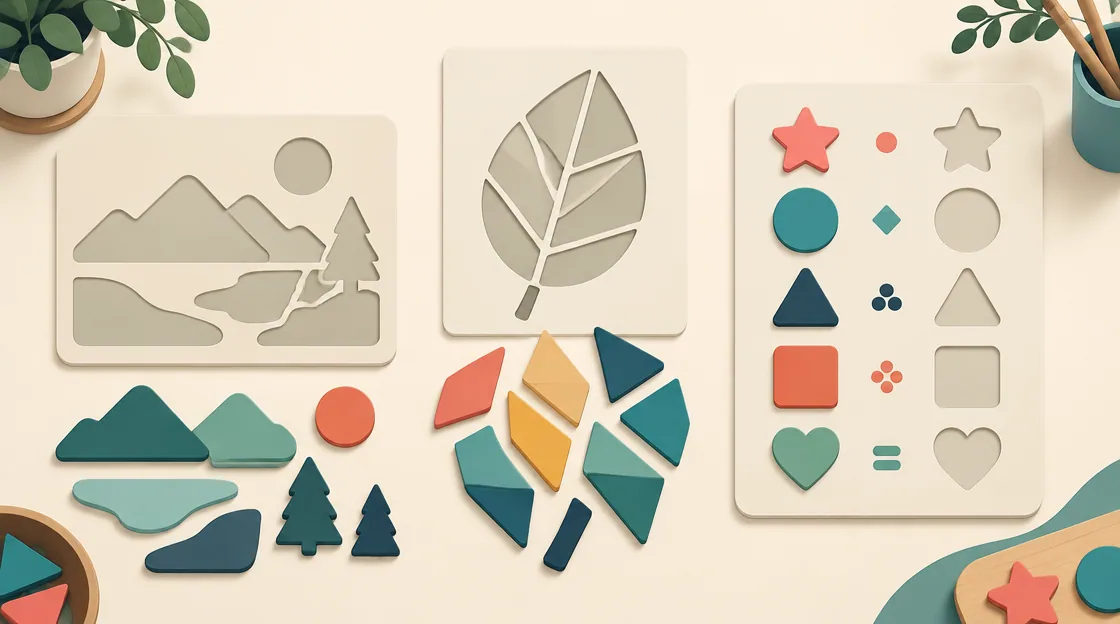
Compare jigsaw pieces, picture shards and numbered stickers. Choose whether you want visual fitting, fragment assembly or keyed placement.
 Puzzle
Word Game Hints: Choose the Right Clue When You Stall
Choose word-game help after identifying the missing information. Compare one-letter hints, fragment guidance and whole-category reveals across three games.