Shelf Sorting Games: Free Items Without Blocking More
On this page
A shelf full of matching products can hide an access problem. You may see the third item needed for a triple but still need to move something in front of it. In shelf sorting games, parking that blocker carelessly can create the next obstruction.
Choose a shelf sorter by its movement and timing rules, then evaluate each placement in two places: where the item leaves and where it arrives. That is more informative than judging whether the destination looks neat.
Read the shelf behind the visible product
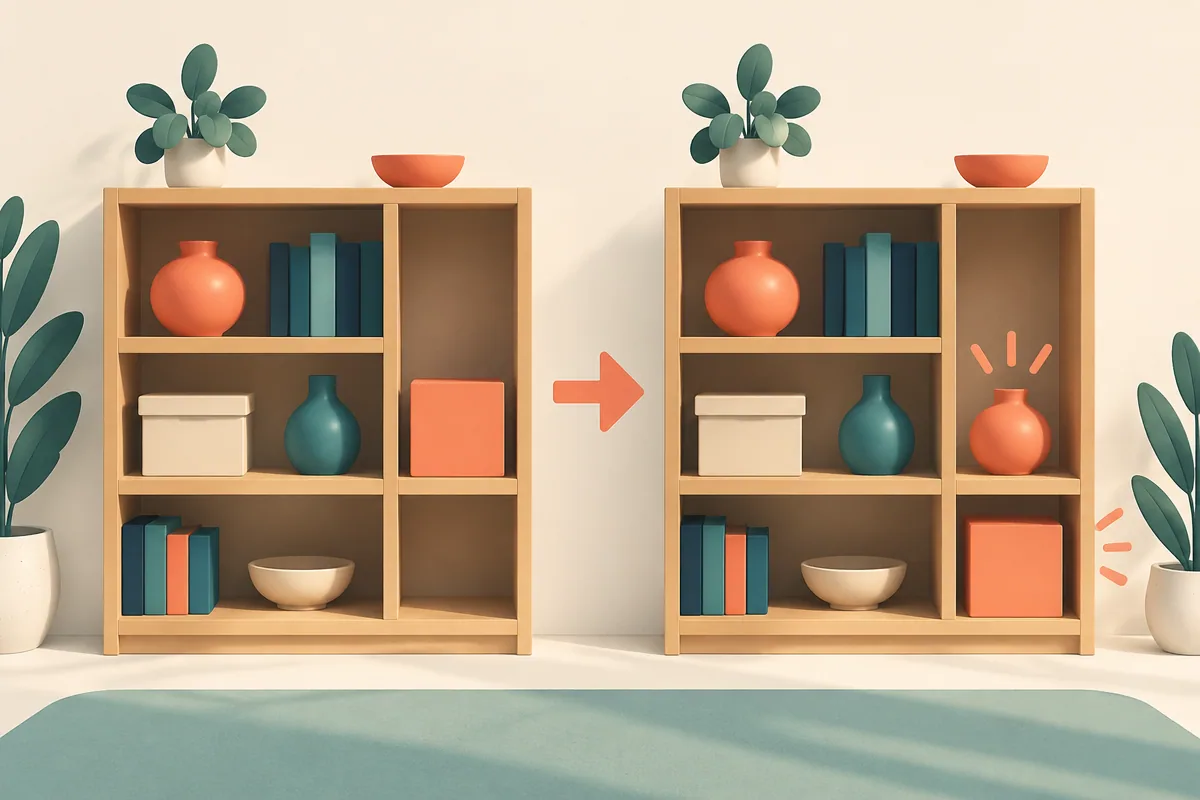
Illustration: The blocker, parked in a spare side compartment, uncovers the match behind it yet remains easy to retrieve.
Good Sort Master: Triple Match moves groceries between compartments until three identical items share a shelf and vanish. Its guide explicitly describes front items blocking those behind, no countdown and no energy system. Use the unhurried inspection to identify a full triple and the moves required to reach it.
Goods Sort 3D uses taps to group three identical snacks, drinks or fruit and clear shelves. Its presentation emphasizes selecting goods and completing groups. Read its current arrangement instead of assuming every cubby has the same depth or drag behaviour as Good Sort Master.
Goods Sort 3D - Triple Puzzle also moves goods between shelves, but its guide explicitly includes a countdown. Hammer, freeze, shuffle and magic staff have different effects. Choose assistance based on whether the obstacle is an item, time or the arrangement, rather than treating them as equivalent extra moves.
Give temporary items a reason to be somewhere
In an invented layout, a carton blocks a needed jar. Moving the carton can be useful, but first check whether its new shelf hides another jar or occupies the only usable temporary location. A sensible temporary placement should either join an upcoming triple or leave an easy path to recovery.
Look for items whose partners are scarce or buried. Covering one of only a few visible partners can postpone a clear even while another shelf looks more organized. Completing a triple is particularly valuable when it releases both room and access.
Separate time pressure from the matching rule
The timed Triple Puzzle requires balancing inspection with the countdown. Identify a reliable set, execute its moves, and inspect the newly available space. The untimed Good Sort Master permits a longer initial survey, so random rapid movement provides less advantage.
A booster does not remove the need to understand the blockage. A shuffle changes the evidence you were using; inspect again afterward. Freezing a clock does not relocate a physically blocking item. Removing an item is useful when that specific item is preventing meaningful progress.
Shelf sorting games: choose the kind of organization you enjoy
Good Sort Master suits access planning without a countdown. Goods Sort 3D suits selecting matching goods from its presented shelves. Triple Puzzle adds an explicit deadline and more intervention choices. Across all three, ask what a move exposes, what it covers and which set it helps finish.
Related tags
Frequently asked questions
Which pick explicitly has no countdown?
Good Sort Master describes no countdown and no energy system.
Does Triple Puzzle have a timer?
Yes. Its shelves must be emptied before the countdown reaches zero.
Why can moving a blocker be unhelpful?
It may uncover one target while hiding another or consuming necessary temporary space.
Should I shuffle after every stall?
First identify the obstacle. A shuffle changes the arrangement and requires a fresh inspection.
Are all shelf controls identical?
No. The guides describe different tap, click and drag actions; follow the selected game.
What makes a particularly useful triple?
It clears matching items while freeing access or receiving space for the next group.
Try the mechanic that interests you
Play Good Sort Master: Triple MatchMore puzzle guides
 Puzzle
Cube Rotation Puzzles: Track Faces as the View Changes
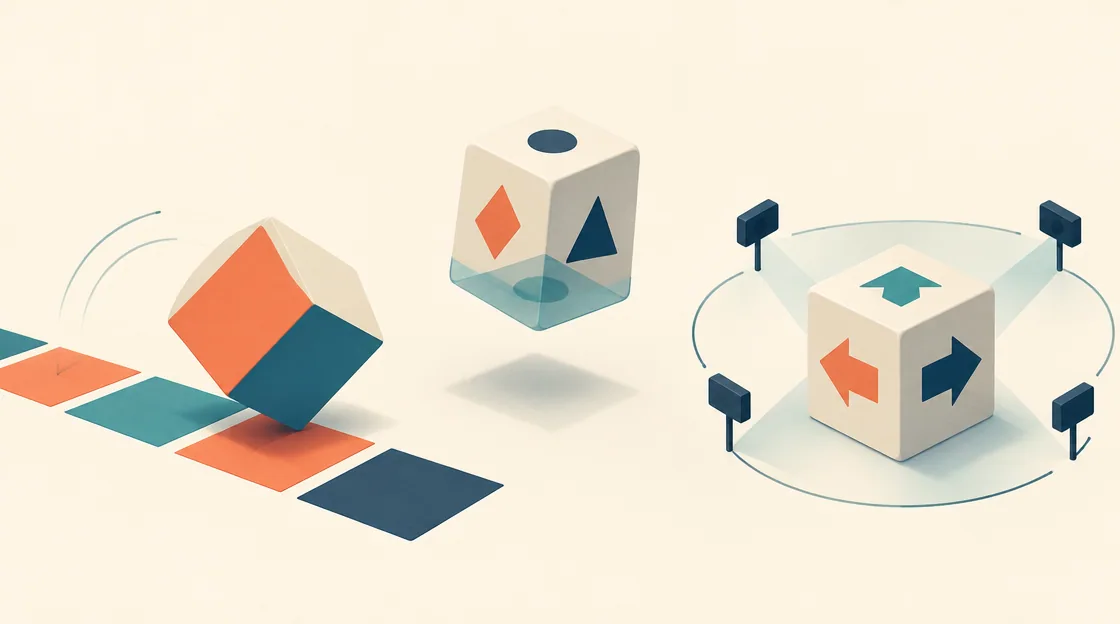
Compare a colour-faced rolling cube, a die with a hidden bottom face and arrows viewed from new angles. Distinguish object orientation from camera rotation.
 Puzzle
Jigsaw Puzzle Games: Compare Pieces, Shards and Stickers
Compare jigsaw pieces, picture shards and numbered stickers. Choose whether you want visual fitting, fragment assembly or keyed placement.
 Puzzle
Word Game Hints: Choose the Right Clue When You Stall
Choose word-game help after identifying the missing information. Compare one-letter hints, fragment guidance and whole-category reveals across three games.
 Puzzle
Block Placement Games: Leave Room for Awkward Shapes
Compare TenTrix, Blocks Puzzle and DD Blocky. Preserve connected empty regions and inspect both rows and columns before placing the next shape.