Trick Picture Puzzles: Draw, Delete or Change One Detail
On this page
A trick picture can be wrong because something is missing or because something extra conceals the explanation. In trick picture puzzles, drawing and erasing produce opposite changes. The first puzzle is deciding which kind of change the task requests.
Trick picture puzzles: decide if the scene lacks or hides information
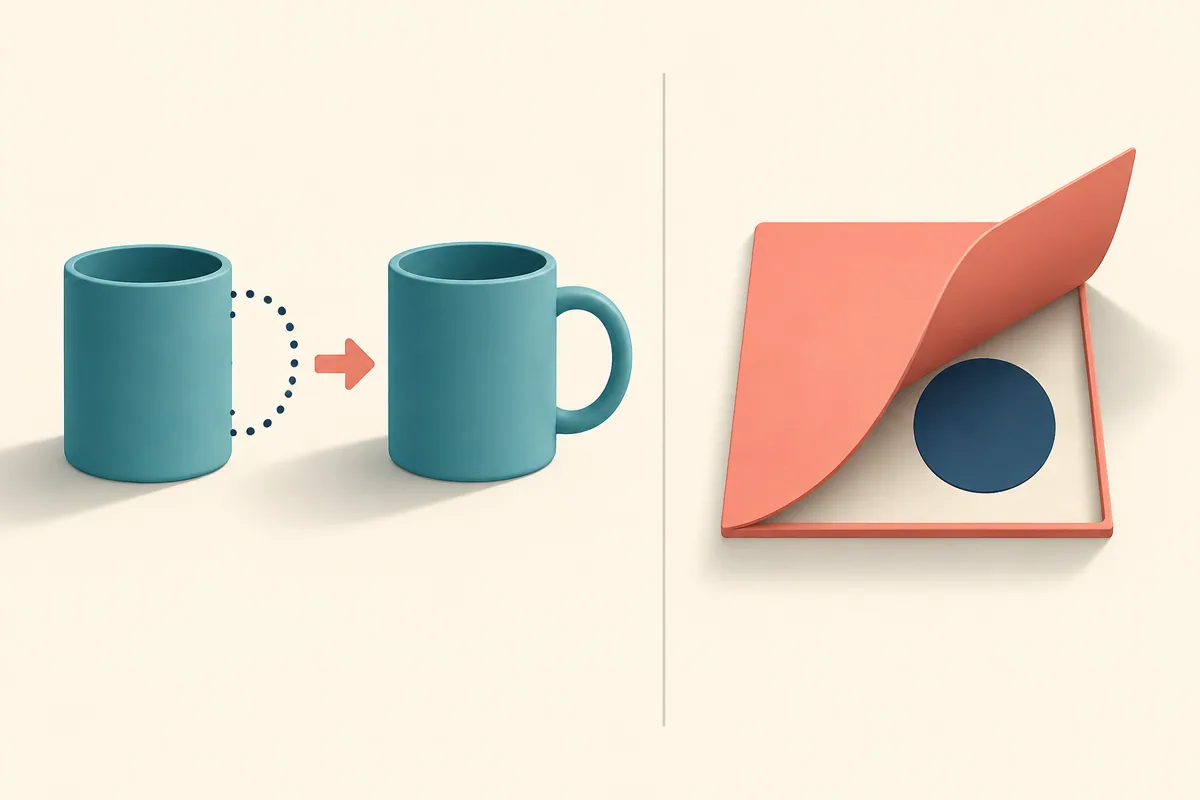
Illustration: One half completes a dotted handle, while the other lifts a flap to expose a hidden shape.
Draw or Delete LoveStory pairs each scene with a short task. You may need to add a missing element or erase an unwanted one. Read the instruction before acting on the most suspicious-looking object; the picture alone does not always identify which tool is appropriate.
Erase the extra element asks you to identify and remove the part that does not belong, revealing the hidden situation. Think about the scene's meaning before selecting. A large decorative object is not automatically the extra element.
DOP Fun: Delete One Part uses an eraser to expose a concealed object or changed scenario. The revelation can reinterpret the picture, so consider what the suspicious covering might hide rather than treating deletion as ordinary cleanup.
Explain the intended change before drawing it
If the scene needs a connection, identify the endpoints and function of the missing line. If it conceals a truth, identify which visible part could plausibly be the covering. This produces a testable idea rather than a random gesture over every object.
In an invented picture, a broken handle might require adding its missing section, while an opaque cover might require removal. Erasing the broken handle does not complete it; drawing over the cover does not reveal what it hides. The same visual area can attract attention while demanding opposite operations.
Use feedback to revise the interpretation
If an action fails, reconsider whether you selected the wrong area, used the wrong operation or misunderstood the task. Changing all three at once makes it harder to learn which assumption was wrong. Use available hints when you can describe the unresolved relationship.
Do not assume a crude sketch must be artistically polished unless the current game says so. The relevant question is whether the shape performs the intended task. Equally, broad erasing without a reason can destroy the part that makes your hypothesis understandable.
Choose Draw or Delete for alternating operations, Erase the extra element for detecting the out-of-place addition, or DOP Fun for uncovering a hidden scenario. The useful insight is a clear explanation of what needs changing, followed by the smallest action that tests it.
Related tags
Frequently asked questions
Does Draw or Delete always require a drawing?
No. Its scene task can call for either adding or erasing an element.
Is the largest object necessarily the extra one?
No. Identify which part contradicts the scene’s intended meaning.
What does DOP Fun reveal?
Erasing the appropriate covering can expose a hidden object or a changed scenario.
How should I react to a failed attempt?
Separate wrong area, wrong tool and wrong interpretation before changing your next test.
Do these games require realistic drawing?
No artistic standard is claimed here. Follow the actual task and current recognition rules.
What makes a useful first action?
A specific hypothesis about the missing function or concealed information, rather than erasing or drawing randomly.
Try the mechanic that interests you
Play Draw or Delete LoveStoryMore puzzle guides
 Puzzle
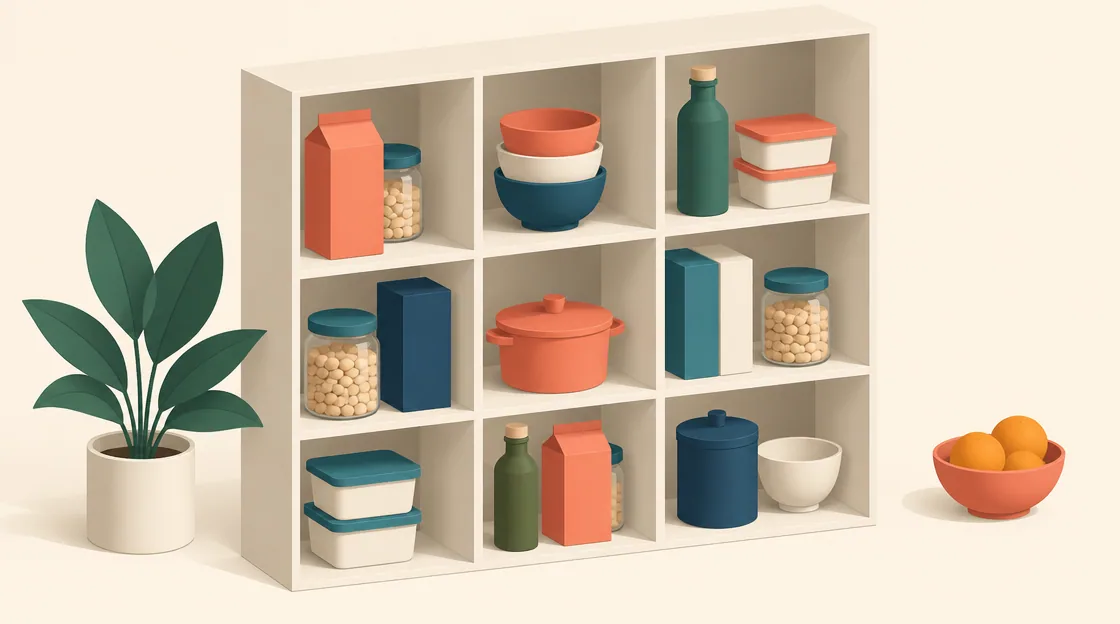
Shelf Sorting Games: Free Items Without Blocking More
Compare three shelf sorters by item access, triple formation and timers. Check what a placement exposes before covering another needed product.
 Puzzle
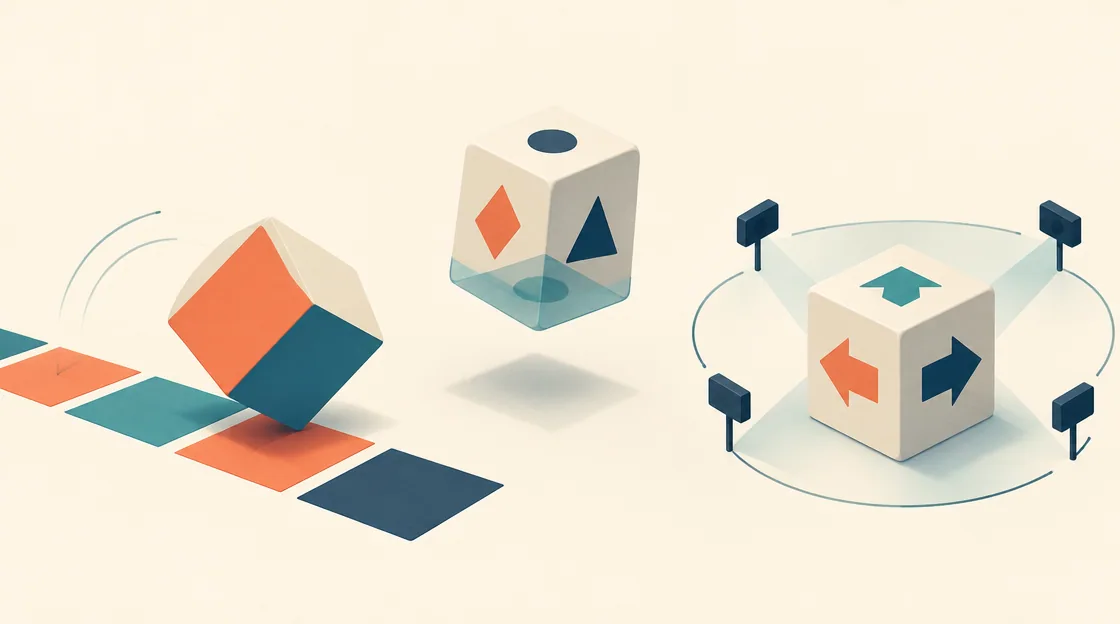
Cube Rotation Puzzles: Track Faces as the View Changes
Compare a colour-faced rolling cube, a die with a hidden bottom face and arrows viewed from new angles. Distinguish object orientation from camera rotation.
 Puzzle
Jigsaw Puzzle Games: Compare Pieces, Shards and Stickers
Compare jigsaw pieces, picture shards and numbered stickers. Choose whether you want visual fitting, fragment assembly or keyed placement.
 Puzzle
Word Game Hints: Choose the Right Clue When You Stall
Choose word-game help after identifying the missing information. Compare one-letter hints, fragment guidance and whole-category reveals across three games.