
Traffic Timing Games: Junctions, Laps and Safe Gaps
On this page
Traffic timing games can make a single press carry a large consequence. Once a car enters moving traffic, there may be no useful correction left. The decision happens while it is still waiting, when you can compare the approaching vehicles and the space after the opening.
Circle Car and Transport Run both reward reading gaps, but one launches queued cars into a roundabout while the other lets you accelerate, release and steer through a longer traffic run. Choose whether you want discrete launch decisions or continuous stop-and-go control.
Compare committing once with managing a route
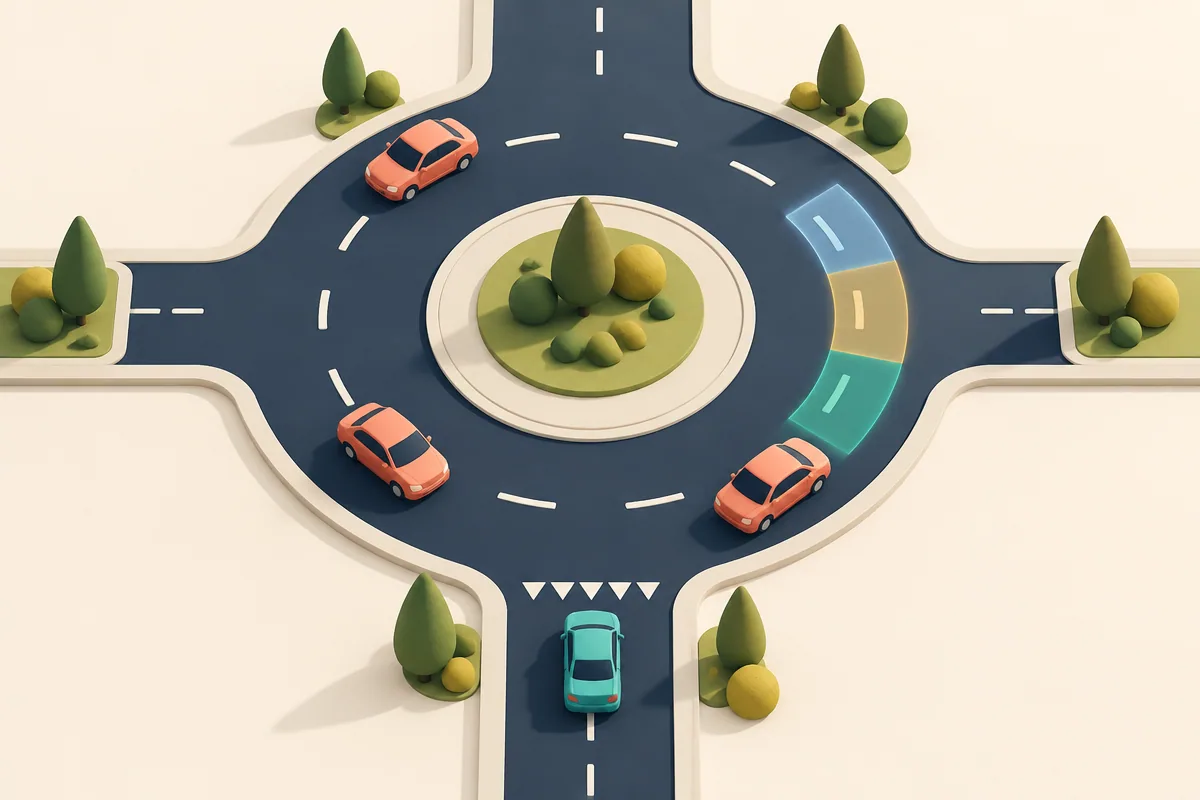
Illustration: Shaded edges of one circulating gap show the teal car how long it has before committing.
| Game | Main input decision | Failure pressure |
|---|---|---|
| Circle Car | When to launch the next queued car | One collision fails the level |
| Transport Run | When to move, stop and change lane | Crashing ends distance progress |
The distinction changes how to prepare. Circle Car asks you to read a circulating pattern before committing a new vehicle. Transport Run asks you to keep updating that judgement as the vehicle reaches more traffic.
Circle Car: inspect the arriving gap
Circle Car appears as Traffic Car Circle on screen. Cars wait at an entrance while other vehicles circulate; launch every queued car safely to clear the level. The guide lists click, Space, Up or W for the launch action, dragging to orbit the camera and the wheel to zoom.
Watch the opening as it approaches the entrance, not only when it sits directly in front of the waiting car. The following vehicle matters because it defines how long the gap remains useful. If the view makes distances hard to read, change the camera before launching. A single mistimed release causes a pile-up and failure, and later levels add faster traffic and clock pressure.
Transport Run: release is an active choice
Transport Run lets you hold the mouse button or Space to accelerate, release to stop or brake, and use the mouse or arrows to steer between lanes. Distance is the main score, with upgrades supporting vehicle progress. Waiting is therefore part of the control system rather than a sign you have failed to act.
Inspect the next lane as well as the current one. Holding through an opening can move you into a position with no room to change lanes afterward. Releasing early can preserve options, but waiting indefinitely does not create progress. Look for a sequence of manageable gaps instead of treating every visible opening as an instruction to accelerate immediately.
Traffic timing games: judge a gap by entry, occupancy and exit
First identify where your vehicle will enter the traffic path. Then consider the space it occupies while crossing or merging. Finally inspect the space available once it has moved through. The method prevents a common error: judging only whether the front of the car can enter at the current instant.
For an illustrative roundabout situation, a large-looking opening may be narrowing because the next circulating car is already close behind it. In a lane-based run, the immediate gap may be clear while the next lane is blocked. These are conceptual examples, not exact timing solutions for a particular level. Read the motion actually shown.
Make one correction after a failed attempt
If you launched into a closing gap, focus on the following vehicle next time. If the gap was clear but hard to judge from the angle, improve the view. If you entered successfully but could not continue, inspect the exit space earlier. Changing all three habits simultaneously makes the result harder to interpret.
Choose Circle Car for compact decisions with a queue-completion goal, or Transport Run for sustained movement and lane management. Both can be played thoughtfully without claiming that a fixed count of seconds or a repeated button rhythm will fit every traffic pattern.
Related tags
Frequently asked questions
What clears a Circle Car level?
Send every queued car into the roundabout without a collision. One mistimed launch can trigger a pile-up and fail the level.
Can I change the view in Circle Car?
The guide lists mouse dragging to orbit the camera and the scroll wheel to zoom. Use those tools before committing if the entrance is hard to read.
Does releasing the input matter in Transport Run?
Yes. Holding accelerates while releasing stops or brakes. It is part of managing traffic gaps, alongside steering.
Why inspect the vehicle after a gap?
It defines how long the opening remains usable. A gap that looks clear now may close before your movement is complete.
Is there a fixed rhythm that solves every level?
No such solution is established. Traffic speed, position and the route can change, so read the current movement rather than relying on an arbitrary count.
Which game has the more discrete decision structure?
Circle Car centres on launching each queued car. Transport Run demands repeated movement, stopping and lane choices during a longer distance attempt.
Try the game that fits your next challenge
Play Circle CarMore racing guides
 Racing
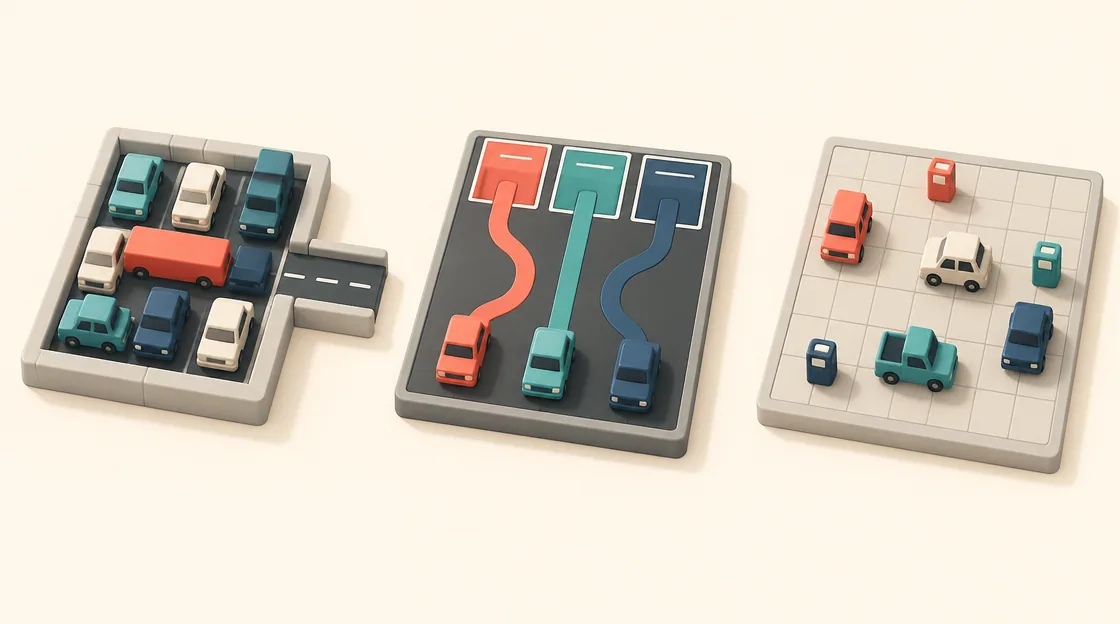
Parking Puzzle Games: Plan Routes, Fuel and Car Order
Compare six parking games on Zigzigo by route drawing, traffic removal, fuel rules, move order and careful steering. Find the right planning challenge.
 Racing
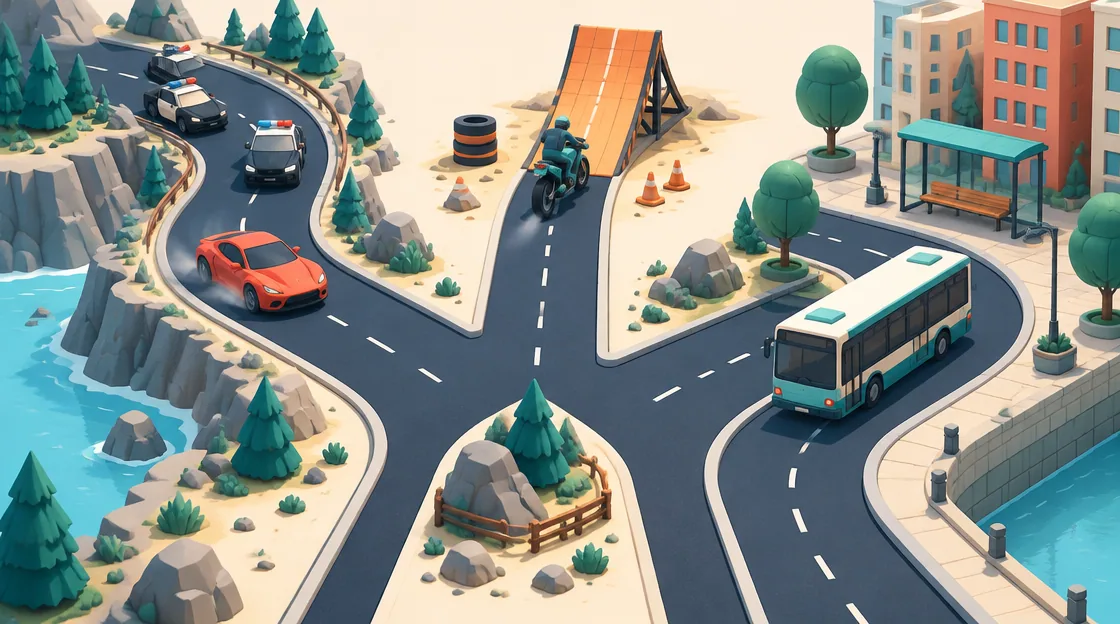
Browser Racing Games: Stunts, Chases and Steady Driving
Compare six browser driving games on Zigzigo, from police chases and motorcycle stunts to bus routes and timed drag-racing shifts.
 Racing
Motorcycle Upgrade Games: Pick Progression That Fits
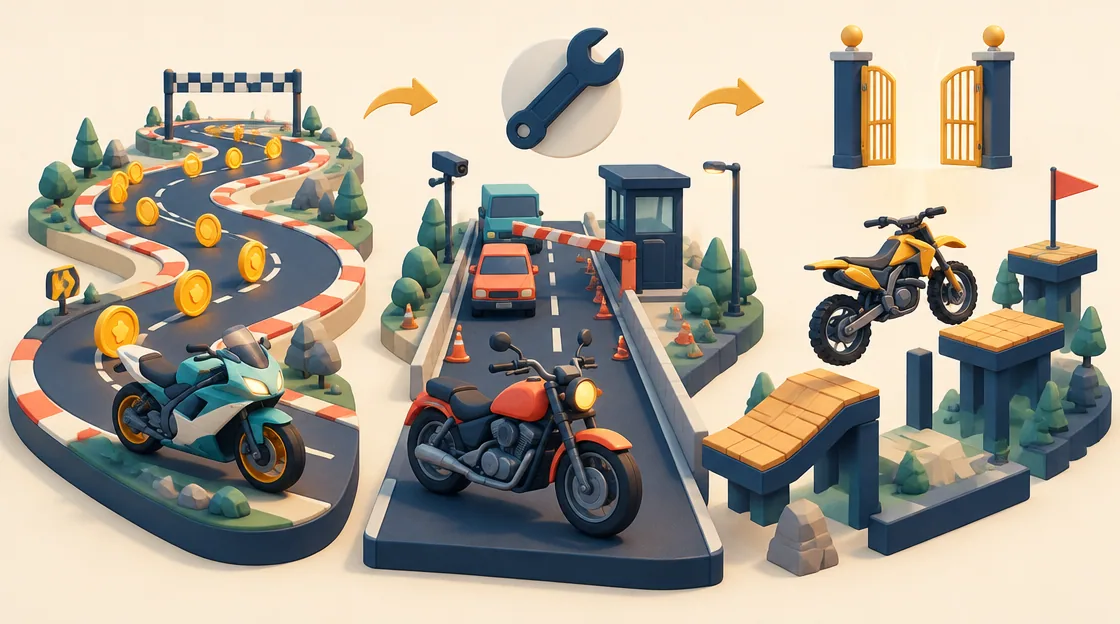
Compare motorcycle progression through circuit upgrades, traffic earnings and stunt-stage unlocks. Connect each purchase to a clear riding objective.
 Racing
Highway Racing Games: Read Traffic and Choose Gaps
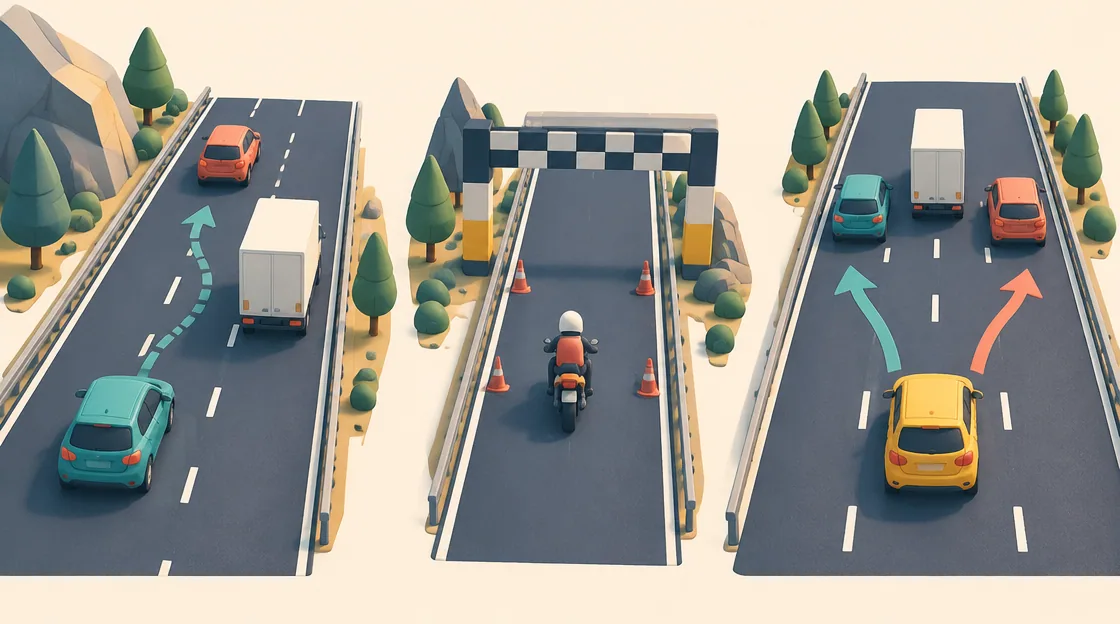
Compare highway racing games by near-miss risk, checkpoints, distance runs and practice modes. Learn to read the space after an overtake.