Scene Recall Games: Remember Objects with Locations
On this page
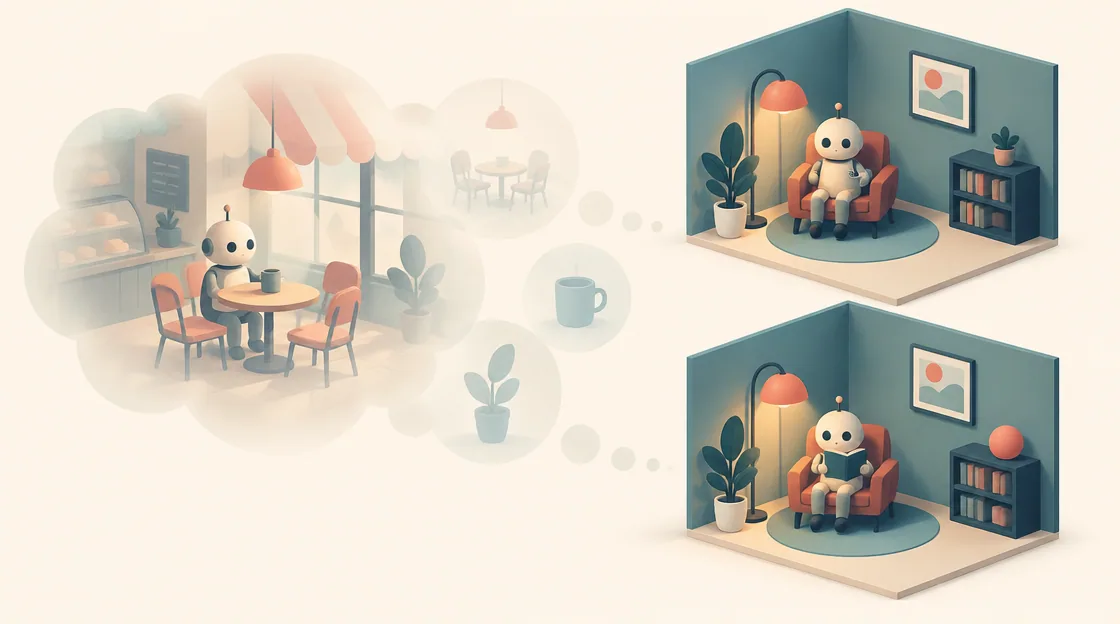
In scene recall games, remembering a scene and comparing two scenes are different tasks. In the first, you must retain information before the questions arrive. In the second, both versions can supply evidence while you inspect them. Using the same observation routine for both wastes their strongest cues.
Scene recall games: ask whether the evidence stays on screen
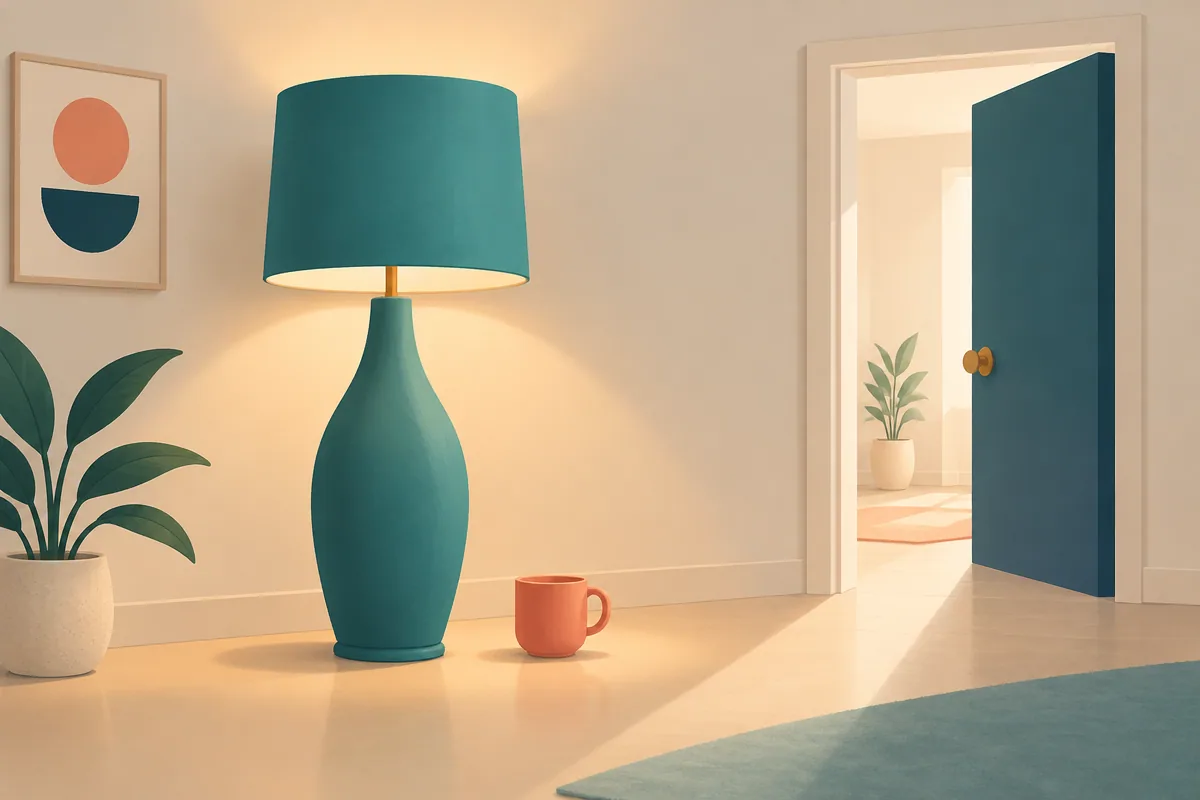
Illustration: Soft halos bind a large teal lamp and a small coral cup to their places by the doorway.
Awareness Game - The Robot Bar gives a ten-second video, then questions about objects, colours and sizes. Connect each notable object with its attributes and location while watching. A loose list of colours does not tell you which object was red.
Robot Bar - Find the differences displays two versions of a scene and asks you to find changes before a timer ends. Its fifth wrong touch loses. Compare corresponding regions directly rather than relying on a remembered impression of the first picture.
Robot Band - Find the differences provides detailed scenes with counters for nine differences each. Fine instrument parts, wires and building textures make systematic region comparison more useful than scanning for one dramatic change.
Store relationships or compare counterparts
For the recall video, make one broad sweep, then retain distinctive combinations: the large object near the counter, the unusual colour beside the doorway. You cannot know every future question, but a relationship carries more useful information than isolated details.
For side-by-side images, choose a small region in one version and inspect its counterpart. Compare object presence, count, orientation and colour. Move to the next region after checking the current one rather than repeatedly switching attention across the entire scene.
A hypothetical mismatch
Imagine one image shows three small lamps while the other shows two. Counting the corresponding region establishes the difference. In a recalled video, seeing three lamps would need to be retained before the question. The same detail requires direct comparison in one format and deliberate retention in the other.
If you miss a question, identify which attribute you failed to connect with the object. If you miss a difference, inspect whether you skipped an area or compared noncorresponding positions. Those diagnoses suggest different changes to the next attempt.
Choose Awareness Game for recall after brief observation, Robot Bar for timed comparison with explicit mistake pressure, or Robot Band for detailed scene inspection. The first step is knowing whether the source evidence remains available.
Related tags
Frequently asked questions
How long is the Awareness Game preview?
Its guide states a ten-second video before the questions.
Why remember an object with its location?
The relationship helps distinguish which colour, size or item a later question refers to.
What ends Robot Bar after wrong touches?
The fifth wrong touch is described as game over.
How many differences does Robot Band list per scene?
Its scene counters show nine differences.
Should I memorize an entire difference picture first?
Directly comparing corresponding regions uses the visible evidence more efficiently than relying only on memory.
What should I check after missing a change?
Look for skipped regions, mismatched comparison positions or an attribute you did not inspect.
Try the mechanic that interests you
Play Awareness Game - The Robot BarMore puzzle guides
 Puzzle
Shelf Sorting Games: Free Items Without Blocking More
Compare three shelf sorters by item access, triple formation and timers. Check what a placement exposes before covering another needed product.
 Puzzle
Cube Rotation Puzzles: Track Faces as the View Changes
Compare a colour-faced rolling cube, a die with a hidden bottom face and arrows viewed from new angles. Distinguish object orientation from camera rotation.
 Puzzle
Jigsaw Puzzle Games: Compare Pieces, Shards and Stickers
Compare jigsaw pieces, picture shards and numbered stickers. Choose whether you want visual fitting, fragment assembly or keyed placement.
 Puzzle
Word Game Hints: Choose the Right Clue When You Stall
Choose word-game help after identifying the missing information. Compare one-letter hints, fragment guidance and whole-category reveals across three games.