
Production Chain Games: Find the Next Resource Bottleneck
On this page
A production chain is limited by the stage that cannot keep the next one supplied. More raw material helps only if processing, storage and delivery can use it. Before buying another worker or machine in production chain games, trace what must happen between gathering and the finished result.
Babel Tower, LumberJack Simulator 3D and Field Master make that reasoning useful in different ways. One is an incremental supply chain, one turns manual logging into a staffed operation, and one asks you to complete a crop cycle with the right machines.
Production chain games: trace the next unfinished stage
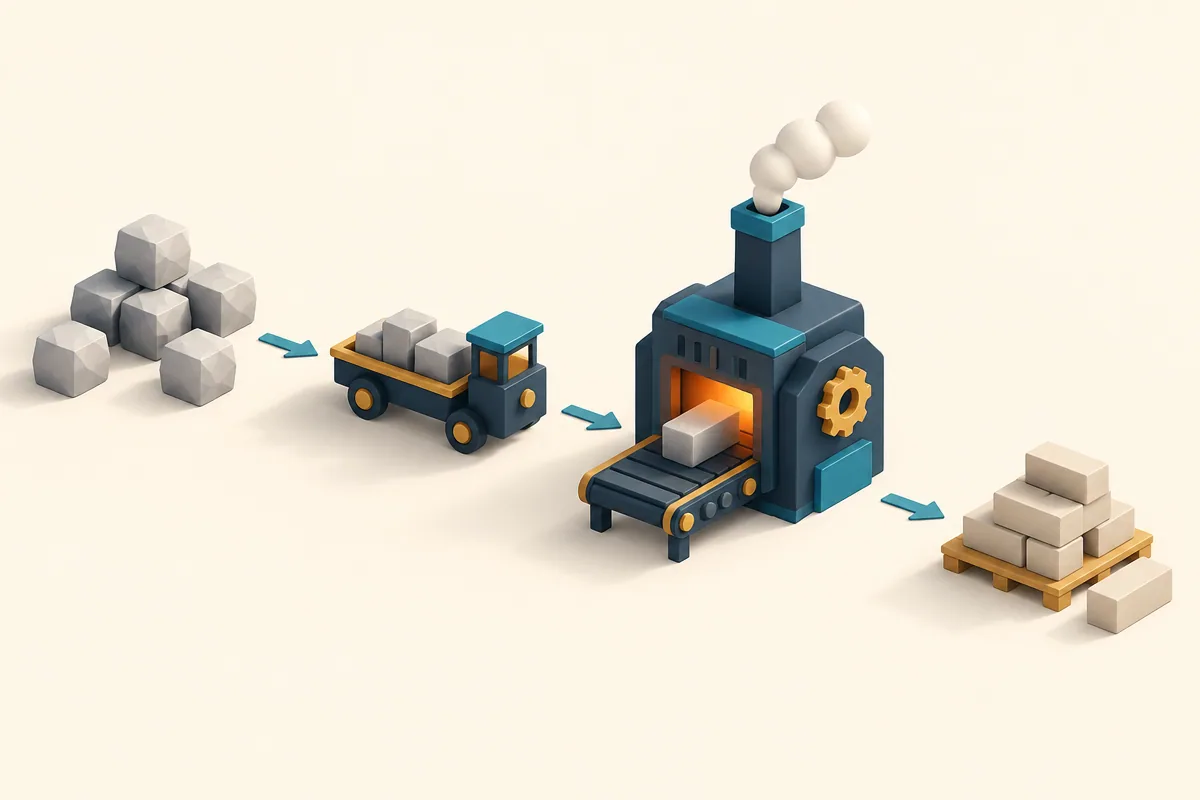
Illustration: A small pile builds up before one station while every other stage in the chain stays clear.
| Game | Documented chain | Likely question to inspect |
|---|---|---|
| Babel Tower | Gathering, transport, processing and building | Which station lacks its input? |
| LumberJack Simulator 3D | Fell trees, cut logs, carry and deliver | Is chopping or transport limiting deliveries? |
| Field Master | Plow, sow, tend and harvest | Which task and vehicle are required next? |
A chain is not always an automated factory. An active farming task can be blocked by the wrong stage just as an idle machine can be blocked by missing supply.
Babel Tower: inspect both sides of a station
Babel Tower starts with Forest and Quarry gathering, then adds water, storage, processing and brick production for the tower. Stations can work automatically after being started, and later systems add transport, food, time and science-related improvements.
Look at a station's input and output before concluding it is too slow. If a resource visibly accumulates before processing while building barely advances, more gathering may not address the constraint. If processing sits without material, the upstream stage is the place to inspect. This is a conceptual bottleneck example, not a claim about a particular player's inventory. New content can add another dependency, so retrace the chain after unlocking it.
LumberJack: separate chopping from carrying
LumberJack Simulator 3D begins with holding the action button near a tree, cutting the fallen trunk into logs and carrying deliveries to the warehouse for coins. Upgrades affect carry amount, chopping speed and storage. Workers need houses, while collectors can gather loose logs automatically.
A field of cut logs can indicate a transport problem rather than a need for faster chopping. A full or inconvenient delivery loop creates a different limitation from waiting beside an uncut tree. Before hiring, read the prerequisite: a lumberjack needs a house, and another worker may not help if the next stage cannot accept the material. Time-limited buyer orders add a reason to keep the actual delivery capacity in mind.
Field Master: a sequence, not one interchangeable task
Field Master takes a field through plowing, sowing, crop care and harvesting. You drive the machines directly, use Q to switch vehicles and E to load or unload. The current stage determines which machine and action make sense.
Inspect whether the field is ready for the next step before driving another pass. Repeating a completed task does not replace the missing stage. If work appears blocked, check the selected vehicle and any load or unload requirement before assuming the game needs a speed upgrade. The catalog does not establish a detailed purchase tree for every machine, so the comparison focuses on the documented work sequence.
Spend on the binding constraint
Name the slow or missing stage in plain language: no wood reaches processing, logs wait for transport or the crop cycle needs the next machine. Then choose a purchase or action that addresses that statement. If the statement stays vague, observe one full cycle before spending.
After the change, trace the chain again. Removing one bottleneck can expose another, which is normal progression rather than proof the earlier purchase failed. The useful habit is following the work from input to completion, not automatically improving whichever button is cheapest or nearest.
Related tags
Frequently asked questions
Does more gathering always increase finished output?
Not if transport, storage or processing is the limiting stage. Trace where material waits or where a station lacks input.
Which Babel Tower stations begin gathering?
The guide describes the Forest for wood and Quarry for stone, with later systems connecting supply, processing and tower construction.
What can limit a LumberJack delivery loop?
Chopping speed, carrying amount and warehouse storage are distinct upgrade areas. Observe which stage delays actual deliveries.
Can I hire a lumberjack without preparation?
The guide states each lumberjack needs a house first. Check that prerequisite before planning the worker purchase.
What do Q and E do in Field Master?
Q switches vehicles and E loads or unloads. The current crop stage determines which machine action is useful.
Why does a new bottleneck appear after an upgrade?
Improving one stage can let work reach the next limit faster. Recheck the full chain rather than assuming the original investment did nothing.
Try the game that fits your next challenge
Play Babel TowerMore strategy guides
 Strategy
Creator Career Games: Projects, Posts and Upgrade Plans
Compare simulated creator careers through game releases, profile activity and video publication. Choose the work loop and feedback you want to learn.
 Strategy
Land Clearing Games: Tools, Routes and Growing Work Areas
Compare garden cleanup, crop-machine work and logging deliveries. Choose tools, carrying upgrades and routes that complete the whole work loop.
 Strategy
Farm Management Games: Crops, Animals and Task Priorities
Choose farm games by crafting, crop-machine missions or egg production and protection. Compare the next task before expanding the homestead.
 Strategy
 Resource Choices: Spend, Save or Reinforce Now
Decide when strategy resources should fund growth, supply or immediate defense. Compare three games using a practical now, next and later check.