
Shape-Switching Runners: Bodies, Poses and Color Rules
On this page
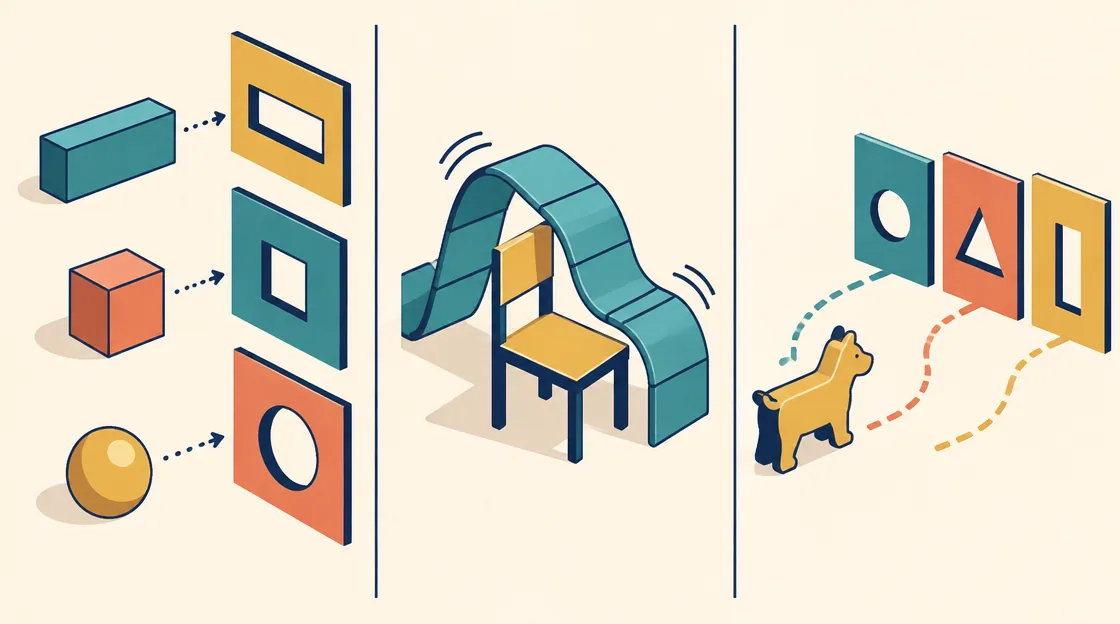
Some runners ask you to find a clear lane. Shape-switching runners make the character's current state part of the obstacle: a body must fit a gate, a pose must avoid furniture or a color must match the safe passage. Moving into the right place is only part of the decision when the character is still in the wrong state.
Morphit, Yoga Master - Flex Running, Color Snake 3D Online and Color Dash - Chameleon Runner show several versions of that idea. Compare whether the documented task is changing a shape, adjusting a pose or following a color rule. Do not assume that similar-looking gates use the same command or that every color-changing character has an identical switch button.
| Game | State to notice | Main action distinction |
|---|---|---|
| Morphit | Rectangle, cube or sphere | Explicit shape selection |
| Yoga Master - Flex Running | Body pose near furniture | Adjust the pose while moving |
| Color Snake 3D Online | Current animal color | Only matching obstacles are safe |
| Color Dash - Chameleon Runner | A color-switching character | Navigate changing themed courses |
Morphit: identify the form before the gate arrives
Morphit provides three documented shape choices. R selects the rectangular shape, C the cube and S the sphere; matching buttons also appear at the bottom. The upcoming obstacle is a recognition-and-timing problem: choose the appropriate form and make the change before contact.
Start by linking each control to its visible shape. If you can recognize the needed form but select the wrong button, the useful correction is the mapping, not a faster guess. If the form is correct but changes too late, timing is the issue. Keeping those errors separate makes the next attempt easier to interpret.
Yoga Master: the opening is about the body, not only the lane
Yoga Master - Flex Running asks you to swipe the character into poses that avoid furniture. Its description also makes some cash pickups a trap. The runner's silhouette and the space around the furniture therefore deserve attention alongside the route.
Look for the clearance the pose needs. A promising pickup can still place the body in the path of an obstruction. Choose this game if you want to adjust the character itself as part of passing an obstacle, rather than select one of Morphit's three geometric forms. Its exact pose interface should be learned from the opening level.
Color Snake: a match determines what is safe
Color Snake 3D Online uses a different rule: the chosen animal may pass obstacles of its own color and must avoid other colors. Some obstacles change color, so a route that appeared usable can require another look as it approaches.
Note the current color before steering. Then inspect both the immediate match and the next obstacle beyond it. This is not the same decision as fitting a shape through a fixed cutout. The important property is the match at the moment you use the passage, while lateral movement places you on that route.
Color Dash: read the current course rather than invent a switch key
Color Dash - Chameleon Runner describes a color-switching chameleon traveling through jungle, neon-city and crystal-cave levels. Its documented controls list arrow-key movement, with coins and a finish line as objectives.
The description establishes a changing-color theme, but not a specific manual color-switch command. Follow the current tutorial for that interaction. Choose it for the course journey and changing environments rather than expecting Morphit's R/C/S mapping. A shared idea of changing state does not establish shared input or a shared obstacle rule.
Work through a state-and-route decision

Hypothetical state-and-route diagram; not an actual gate solution.
Imagine a runner approaching a narrow opening with a reward just beyond it. First identify the required state: shape, pose or matching color. Next choose the route into the opening. Finally check whether the character can continue afterward. Reaching the opening in the right lane but wrong form is a different failure from choosing the right form and the wrong lane.
This imagined sequence helps you order the decisions. It does not supply a particular gate solution or a universal timing cue. The correct state comes from the selected game's rule; the useful habit is to notice that rule before collecting an object distracts you.
Shape-switching runners: choose the kind of adaptation you enjoy
Pick Morphit for explicit geometric choices, Yoga Master for body-pose clearance, Color Snake for safe-color matching, or Color Dash for a color-changing course journey. Their common theme is adaptation, but their controls and completion tasks remain distinct.
After a collision, ask whether you misread the required state, used the wrong command, changed too late or steered into the wrong route. Naming the actual issue gives you a concrete correction and avoids treating every failure as evidence that the game simply needs faster reactions.
Related tags
Frequently asked questions
What shapes can Morphit select?
Its documented controls select a rectangle with R, a cube with C and a sphere with S. Corresponding on-screen buttons are also listed.
How is Yoga Master different from choosing a lane?
The character’s pose must avoid furniture. Position still matters, but changing the body’s shape is part of passing the obstacle.
Which obstacles are safe in Color Snake 3D Online?
The stated rule allows obstacles matching the animal’s current color. Other colors must be avoided, and changing obstacle colors require continued attention.
Does Color Dash document the same shape buttons as Morphit?
No. Its guide lists arrow-key movement and does not establish Morphit’s R/C/S selection scheme. Use its current tutorial for color interactions.
Should I prioritize a visible reward over the required state?
First make sure the character can pass the obstacle. A reward route is useful only if the pose, shape or color rule also permits safe progress.
How do I distinguish an input mistake from a timing mistake?
Check whether you selected the intended state at all. A wrong selection and a correct selection made too late need different corrections.
Try a runner with three explicit shape choices
Play MorphitMore arcade guides
 Arcade
Side-Scrolling Shooters: Ground Fire or Aerial Routes
Compare side-scrolling shooters by ground movement, free flight, enemy approaches and mission structure in Alpha Guns, Crazy Plane Shooter and Super Pork.
 Arcade
Vertical Climbing Games: Platforms, Dashes and Stacks
Compare vertical climbing games by alternating jumps, stacking blocks, timed jelly leaps and checkpoint routes. Choose the upward challenge you want.
 Arcade
Top-Down Shooter Games: Movement, Aim and Open Space
Compare top-down shooters by movement, aiming and the space you must protect in Geometry Gunner, The Room and In Space.
 Arcade
Flight Runner Games: Glide, Climb and Follow the Light
Compare flight runners by steering, upward taps, boosts and light management in Paperly, Horizon, Going Up and Shadobirds.