Beach Bowling Tips: Aim, Spin and Adjust Your Next Roll
On this page
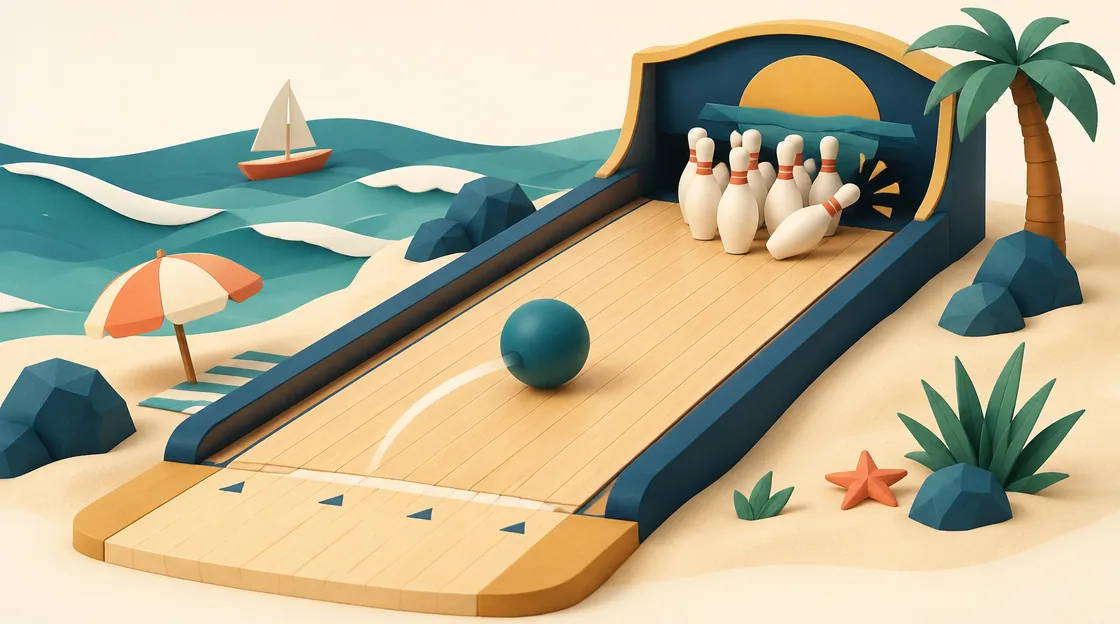
Beach Bowling 3D turns each roll into two connected choices: where to aim and how much spin to use. A miss can come from either one, so changing both immediately makes it harder to learn from the lane. So the first of these Beach Bowling tips is simple: begin with a deliberate line, observe the contact and then adjust one setting.
The game offers computer opponents, friend challenges and level progression. This guide focuses on the documented interface and the feedback from a roll rather than inventing a scoring table or a guaranteed strike line.
Beach Bowling tips: establish the aim and release controls
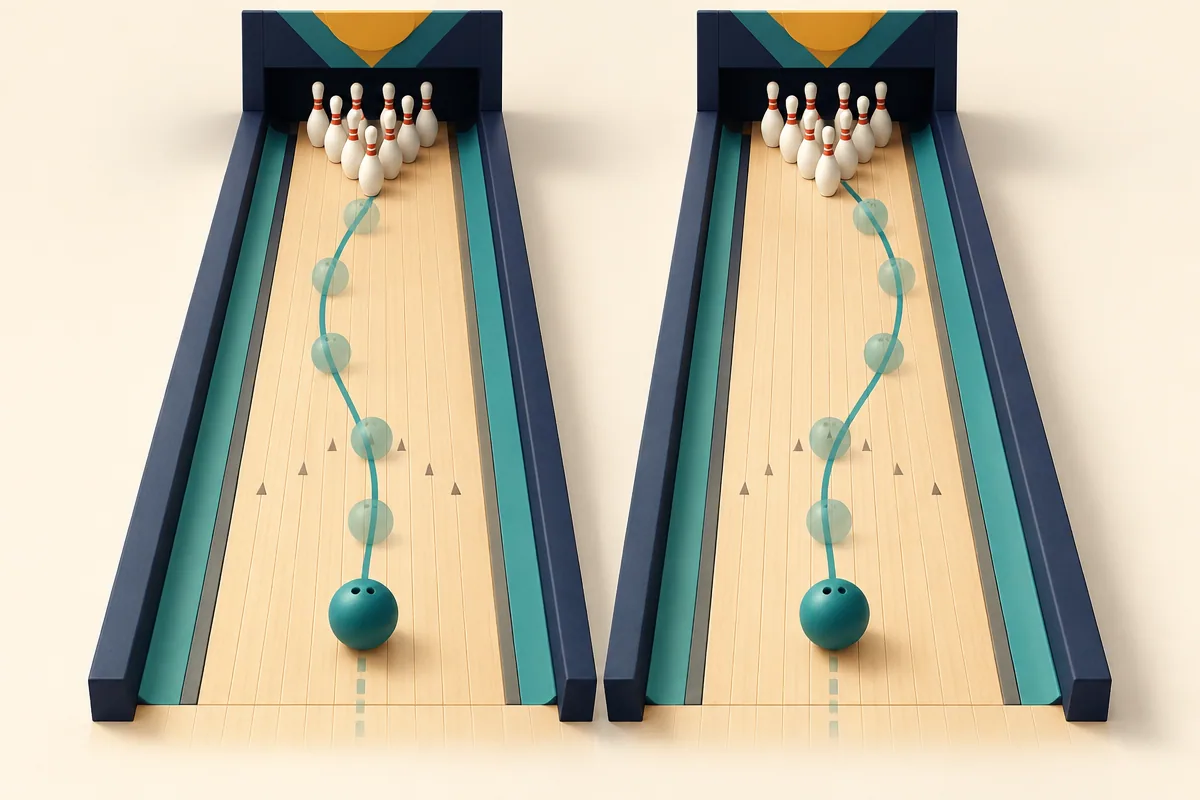
Illustration: Aim stays fixed across both lanes, so the second ball's altered curve comes from spin alone.
Beach Bowling 3D lists arrow keys for adjusting aim on a computer. The roll action and spin interaction are described as displayed controls rather than a fully verified keyboard sequence, so inspect those prompts before starting. Do not assume Space works merely because another sports game uses it.
Check which setting is currently active. A direction adjustment and a spin adjustment should have visibly different purposes. Make a small change and observe the indicator or ball path before adding another. The beach setting is decorative; the useful information remains the lane, the ball and the standing pins.
Create a baseline roll
Choose a clear aiming idea and a modest, deliberate spin setting as the interface permits. Keep the same lane and opponent difficulty while learning. Watch where the ball first travels and where it meets the pin arrangement. A baseline can be useful even when several pins remain.
After the roll, describe the result simply: the ball travelled left of the intended line, curved late or contacted a different side of the arrangement. That is more informative than calling the whole roll weak. Avoid inventing exact angles or a power measurement the game does not provide.
Change aim and spin separately
If the starting line is wrong, adjust aim while keeping spin similar. If the starting line looks right but the curve changes the contact, examine the spin. Those are different causes and should not be corrected with the same random movement.
A useful comparison uses two nearby settings rather than opposite extremes. Large changes can produce dramatically different results without showing where the useful range lies. If the game supplies a trajectory or spin cue, treat it as an aid to a hypothesis and verify the actual roll. The catalog does not establish that every visual guide predicts the result perfectly.
Read the remaining arrangement
When pins remain, look at their positions before repeating the first roll idea. The next useful contact may be different because the arrangement has changed. Do not assume the same aim is appropriate simply because the lane is familiar.
Use the scoring and turn prompts displayed by the game to understand what the next roll requires. The catalog confirms knocking down pins and competing across levels, but does not supply every scoring exception or a complete friend-mode setup. Learning those details in the interface is part of making a deliberate attempt.
Keep a short record of useful adjustments
Remember one successful relationship, such as a small aiming change that brought the ball closer to the intended contact with the spin unchanged. Then test whether it remains useful in a comparable situation. One fortunate roll is not enough to establish a universal line for every pin arrangement.
For a first session, aim for understandable rolls rather than a perfect result. Once you can separate the initial direction, curve and contact, the next adjustment has a purpose.
Related tags
Frequently asked questions
What is the confirmed aiming input?
Beach Bowling 3D lists arrow keys for adjusting aim on a computer. Check the displayed roll and spin prompts for the remaining actions.
Can I assume Space releases the ball?
No confirmed Space binding is established in the catalog. Use the release control shown by the loaded game.
Should I change aim and spin after every miss?
Change one first. If both move at once, you cannot tell which caused the different line or contact.
Why inspect the pins left standing?
The next useful contact can differ from the first because the arrangement has changed. Repeating the original aim may no longer serve the task.
Does the game offer opponents?
Its guide describes computer opponents and friend challenges, plus levels. Confirm the current friend-mode setup in the interface.
Is there one guaranteed strike line?
No universal line or exact scoring solution is established. Build a baseline and use the visible ball path and remaining pins to guide small changes.
Try the game that fits your next challenge
Play Beach Bowling 3DMore sports guides
 Sports
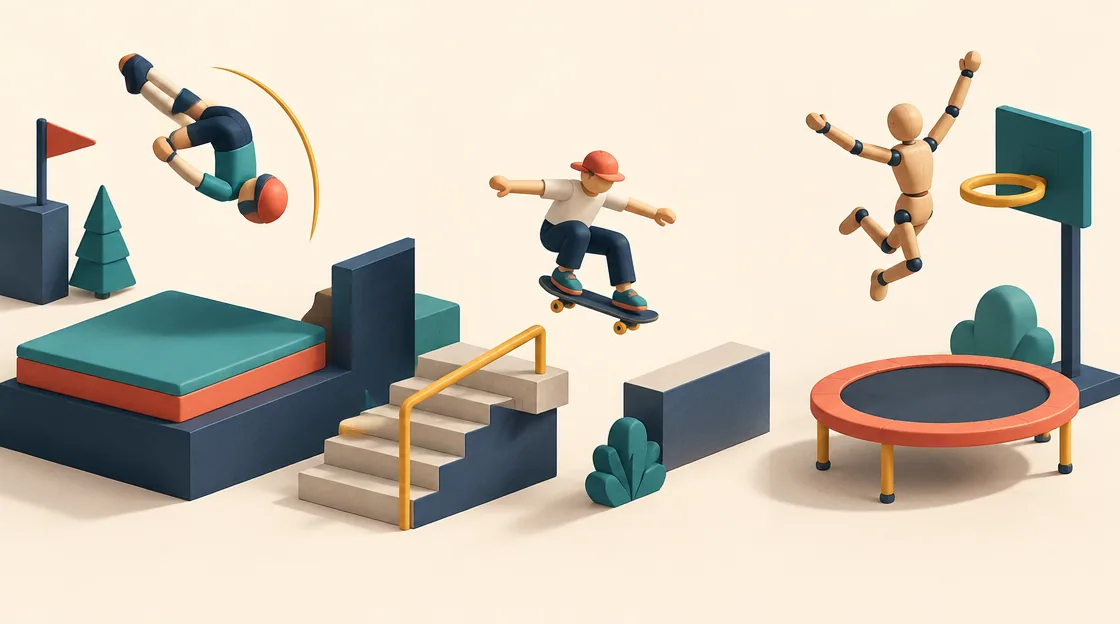
Landing Timing Games: Skates, Flips and Body Control
Compare flip landings, endless skating and ragdoll dunk routes. Learn to inspect the approach and first contact before a late correction.
 Sports
Browser Golf Games: Long Drives or Planned Hole Shots
Choose between Golf Orbit distance upgrades and Just Golf obstacle holes. Compare swing timing, payouts, guided aim and optional star routes.
 Sports
Flight Landing Games: Routes, Tasks and Smooth Arrivals
Compare browser flight games by landing focus, cockpit interaction and varied missions. Choose a task and learn the control layout before flying.
 Sports
Fishing Game Styles: Bait Choices or Arcade Reactions
Choose fishing games by bait selection, slow-boat positioning or timed arcade catches. Compare three Zigzigo options and their documented controls.